







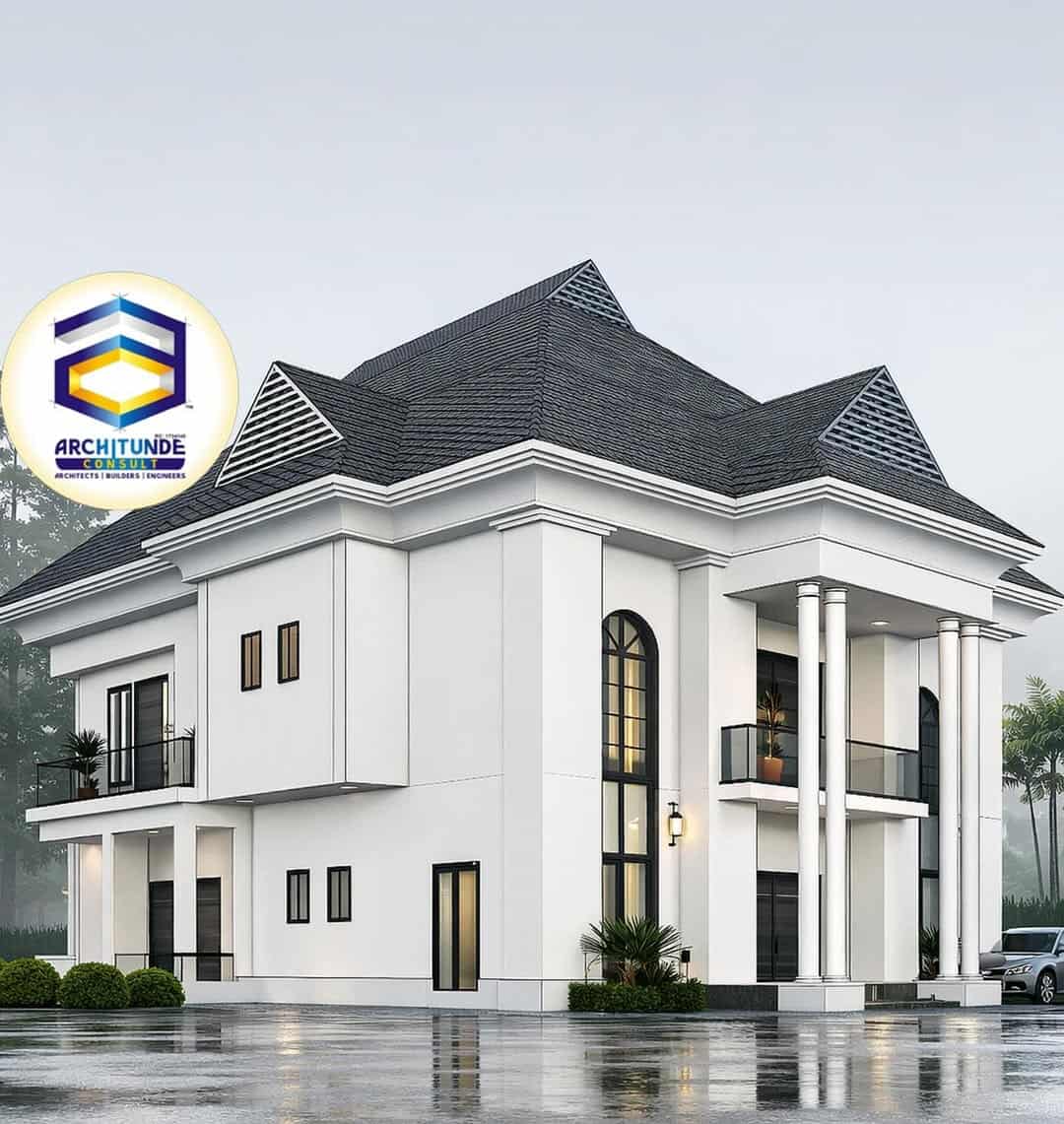
If you are planning to build a home, one of the first questions you will likely ask is “How many blocks for a 5 bedroom house?” Understanding the number of blocks required for a building project is essential because it helps you estimate costs, prepare a realistic budget, and avoid unnecessary expenses during construction.
The exact answer to how many blocks for a 5 bedroom house depends on several factors, including the building design, room sizes, wall height, block dimensions, and whether the house is a bungalow or duplex. However, most standard 5-bedroom houses require between 4,500 and 12,000 blocks, depending on the complexity of the structure.
This comprehensive guide explains everything you need to know about how many blocks for a 5 bedroom house, including calculations, influencing factors, cost estimates, and practical tips to help you plan your construction project efficiently.
Understanding Block Requirements for a 5 Bedroom House
Before estimating how many blocks for a 5 bedroom house, it is important to understand how blocks are used in construction.
Blocks are primarily used for:
- External walls
- Internal partition walls
- Fence walls
- Foundation structures
- Staircase enclosures
- Utility rooms
The total number of blocks required depends on the total wall area of the building.
In many African countries, especially Nigeria, builders commonly use:
- 6-inch blocks for internal walls
- 9-inch blocks for external walls
The choice of block size directly affects the overall quantity needed.
Standard Block Dimensions
Common block dimensions include:
| Block Type | Dimensions |
|---|---|
| 6-Inch Block | 450mm × 225mm × 150mm |
| 9-Inch Block | 450mm × 225mm × 225mm |
On average, one square meter of wall requires approximately:
- 10 blocks
- Mortar for bonding
- Plastering materials
This serves as the foundation for calculating how many blocks for a 5 bedroom house.
Factors That Determine How Many Blocks for a 5 Bedroom House
Several factors influence how many blocks for a 5 bedroom house.
House Design
A compact 5-bedroom bungalow will use fewer blocks than a luxury 5-bedroom duplex.
For example:
- Compact bungalow: 4,500–6,500 blocks
- Standard bungalow: 6,000–8,000 blocks
- Duplex: 8,000–12,000 blocks
Building Height
Wall height significantly impacts block requirements.
Common wall heights:
- 3 meters
- 3.3 meters
- 3.6 meters
Higher walls require more blocks.
Room Sizes
Large bedrooms increase wall lengths and consequently increase block quantities.
A luxury master bedroom suite may require hundreds more blocks than a standard bedroom.
Internal Partitions
Every internal wall contributes to total block consumption.
A 5-bedroom home typically contains:
- Bedrooms
- Bathrooms
- Kitchen
- Dining room
- Living room
- Family lounge
- Passageways
More rooms mean more partition walls and more blocks.
Openings
Doors and windows reduce wall area.
A house with many large windows may use several hundred fewer blocks than a similar design with fewer openings.
How to Calculate How Many Blocks for a 5 Bedroom House
The most accurate way to estimate how many blocks for a 5 bedroom house is by calculating wall areas.
Step 1: Determine Perimeter
Assume a 5-bedroom bungalow measures:
- Length = 20 meters
- Width = 15 meters
Perimeter:
2 × (20 + 15)
= 70 meters
Step 2: Calculate External Wall Area
Wall height:
3 meters
External wall area:
70 × 3
= 210 square meters
Step 3: Calculate Internal Wall Area
Internal partitions may total approximately:
180 square meters
Step 4: Total Wall Area
210 + 180
= 390 square meters
Step 5: Multiply by Blocks per Square Meter
390 × 10
= 3,900 blocks
Step 6: Add Waste Allowance
Construction projects typically include:
10–15% extra blocks
3,900 + 15%
= 4,485 blocks
Therefore, a standard 5-bedroom bungalow may require approximately 4,500 to 5,000 blocks.
This provides a practical answer to the question, how many blocks for a 5 bedroom house.
How Many Blocks for a 5 Bedroom Bungalow?
Many homeowners specifically ask how many blocks for a 5 bedroom house when building a bungalow.
A standard 5-bedroom bungalow generally requires:
| Building Type | Estimated Blocks |
|---|---|
| Compact Design | 4,500–5,500 |
| Standard Design | 5,500–7,000 |
| Luxury Design | 7,000–8,500 |
Luxury designs often feature:
- Larger rooms
- Extended corridors
- Multiple bathrooms
- Walk-in closets
- Additional lounges
These features increase wall areas and block usage.
For most homeowners, the realistic answer to how many blocks for a 5 bedroom house in bungalow form is around 6,000 blocks.
How Many Blocks for a 5 Bedroom Duplex?
When considering how many blocks for a 5 bedroom house built as a duplex, the numbers increase significantly.
A duplex contains:
- Ground floor walls
- Upper floor walls
- Staircase walls
- Additional structural components
Estimated block requirements:
| Duplex Type | Estimated Blocks |
|---|---|
| Compact Duplex | 8,000–9,000 |
| Standard Duplex | 9,000–10,500 |
| Luxury Duplex | 10,500–12,000+ |
Because the building has two levels, wall areas nearly double.
Therefore, how many blocks for a 5 bedroom house designed as a duplex is usually between 9,000 and 12,000 blocks.
Cost Implications of Block Quantities

Knowing how many blocks for a 5 bedroom house helps estimate construction costs.
Assume block prices range from:
- ₦400 per block
- ₦500 per block
- ₦600 per block
Example Calculation
For 6,000 blocks:
At ₦400:
6,000 × ₦400
= ₦2,400,000
At ₦500:
6,000 × ₦500
= ₦3,000,000
At ₦600:
6,000 × ₦600
= ₦3,600,000
These estimates only cover block purchases.
Additional costs include:
- Cement
- Sand
- Water
- Labor
- Transportation
- Reinforcement materials
Therefore, understanding how many blocks for a 5 bedroom house is critical for accurate budgeting.
Common Mistakes When Estimating Blocks
Many first-time builders underestimate how many blocks for a 5 bedroom house.
Ignoring Internal Walls
Some calculations only consider external walls.
Internal partitions often account for nearly half of total block usage.
Forgetting Waste Allowance
Blocks may break during:
- Transportation
- Offloading
- Construction
Always add 10–15%.
Using Generic Estimates
Every design differs.
Two 5-bedroom houses can vary by thousands of blocks.
Not Consulting Professionals
Architects and quantity surveyors provide accurate estimates based on drawings.
Professional services reduce costly mistakes.
Ways to Reduce Block Consumption
If you’re concerned about how many blocks for a 5 bedroom house, several strategies can help reduce block usage.
Optimize Room Layout
Efficient room arrangements reduce wall lengths.
Minimize Unnecessary Corridors
Long hallways increase wall area.
Use Open-Plan Designs
Open-plan living areas require fewer partition walls.
Work with an Experienced Architect
Professional architects create space-efficient designs.
Helpful architectural resources include:
These platforms showcase modern designs that optimize space and construction materials.
Professional Estimation Methods Used by Quantity Surveyors
Quantity surveyors calculate how many blocks for a 5 bedroom house using detailed measurements from architectural drawings.
Their process includes:
Measuring Wall Lengths
Every wall is measured individually.
Calculating Wall Heights
Floor-to-ceiling dimensions are incorporated.
Deducting Openings
Doors and windows are subtracted.
Applying Block Factors
Standard block coverage rates are applied.
Adding Construction Allowances
Extra percentages account for waste and breakage.
This method provides the most reliable answer to how many blocks for a 5 bedroom house.
Sample Block Estimates for Different 5 Bedroom House Sizes
The following estimates provide a realistic guide.
| House Size | Estimated Blocks |
|---|---|
| 250 sqm | 4,500–5,500 |
| 300 sqm | 5,500–6,500 |
| 350 sqm | 6,500–7,500 |
| 400 sqm | 7,500–8,500 |
| Duplex 350 sqm | 8,500–10,000 |
| Duplex 450 sqm | 10,000–12,000 |
These figures help answer the question of how many blocks for a 5 bedroom house across different project sizes.
Why Accurate Block Estimation Matters
Knowing how many blocks for a 5 bedroom house provides several advantages.
Better Budget Planning
You can estimate material costs accurately.
Reduced Material Waste
Avoid over-purchasing blocks.
Improved Project Scheduling
Material availability prevents construction delays.
Easier Contractor Management
Accurate quantities improve procurement planning.
Financial Control
You avoid unexpected expenses during construction.
For large projects, many homeowners also consult quantity surveying professionals through organizations such as:
These organizations promote professional cost management in construction.
Conclusion
The question “How many blocks for a 5 bedroom house?” does not have a single universal answer because every design is different. However, for most projects, a standard 5-bedroom bungalow typically requires between 4,500 and 8,000 blocks, while a 5-bedroom duplex often requires 8,000 to 12,000 blocks.
The most accurate way to determine how many blocks for a 5 bedroom house is to use architectural drawings and professional quantity surveying calculations. Factors such as building size, wall height, room arrangement, block dimensions, and waste allowance all influence the final quantity.
By understanding these factors and planning carefully, homeowners can budget accurately, reduce waste, and ensure a smoother construction process from foundation to completion.
Also read: How Much to Build a 2 Room House? Complete Cost Breakdown, Budget Guide, and Building Tips
Frequently Asked Questions (FAQs)
1. How many blocks are needed for a standard 5-bedroom bungalow?
A standard 5-bedroom bungalow generally requires between 5,500 and 7,000 blocks, depending on room sizes, wall height, and architectural design.
2. How many blocks are needed for a 5-bedroom duplex?
Most 5-bedroom duplexes require between 8,000 and 12,000 blocks because they contain two floors and additional structural walls.
3. Can I estimate how many blocks for a 5 bedroom house without a building plan?
You can make rough estimates, but accurate calculations require architectural drawings. A quantity surveyor or architect can provide the most reliable estimate based on the specific design.











+ There are no comments
Add yours