







Building a home is one of the biggest financial investments most people will ever make. Whether you’re planning a family home, rental property, vacation cabin, or tiny house, one question almost always comes first: Which is the cheapest material to build a house?
The answer is not as simple as choosing the lowest-priced material available. The cheapest material to build a house depends on factors such as local availability, labor costs, climate, maintenance requirements, durability, and construction methods. A material that appears inexpensive upfront may become expensive later due to repairs, insulation needs, or structural issues.
Today, builders around the world use a wide variety of materials, including concrete blocks, wood, steel, shipping containers, earthbags, bamboo, rammed earth, and prefabricated panels. Each option offers unique advantages and disadvantages that affect overall construction costs.
Understanding which is the cheapest material to build a house can save thousands of dollars while helping homeowners create durable, energy-efficient, and comfortable living spaces. In many regions, locally sourced materials provide the greatest savings because transportation costs are reduced significantly.
This comprehensive guide explores the cheapest materials used in residential construction, compares their costs, examines their strengths and weaknesses, and helps you determine which is the cheapest material to build a house for your specific situation.
Understanding What Makes a Building Material Affordable

Before identifying which is the cheapest material to build a house, it’s important to understand what “cheap” actually means in construction.
Many first-time builders focus only on the purchase price of materials. However, total construction cost includes:
- Material costs
- Transportation expenses
- Labor charges
- Foundation requirements
- Insulation needs
- Maintenance costs
- Durability and lifespan
- Energy efficiency
For example, a material that costs less initially may require expensive maintenance every few years. On the other hand, a slightly more expensive material may last decades with minimal upkeep.
Therefore, determining which is the cheapest material to build a house requires examining both short-term and long-term costs.
Factors That Affect the Cost of Building Materials
Several factors influence which is the cheapest material to build a house in a particular location.
Local Availability
Materials sourced locally are usually cheaper than imported products. Transportation can add significant costs to any construction project.
For example:
- Bamboo is often inexpensive in tropical regions.
- Timber may be cheaper in forest-rich countries.
- Concrete blocks may be more affordable in urban areas.
Labor Requirements
Some materials require highly skilled labor.
Examples include:
- Structural steel
- Rammed earth
- Custom masonry
Others can be assembled quickly, reducing labor expenses.
Climate Conditions
Climate plays a major role when determining which is the cheapest material to build a house.
A material that performs well in dry climates may require additional protection in humid environments.
Building Codes
Local regulations can influence material costs. Some areas require special certifications, engineering approvals, or safety measures that increase expenses.
Concrete Blocks: One of the Most Popular Affordable Options
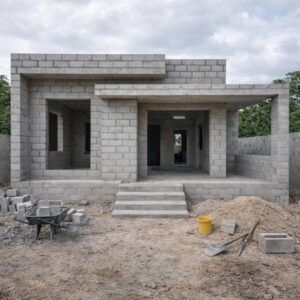
When discussing which is the cheapest material to build a house, concrete blocks consistently appear among the top choices.
Concrete blocks are widely available, durable, and relatively inexpensive.
Advantages of Concrete Blocks
Durability
Concrete blocks resist:
- Fire
- Termites
- Rot
- Mold
Low Maintenance
Unlike wood, concrete does not require frequent treatment or replacement.
Long Lifespan
A properly constructed concrete block house can last several decades.
Availability
In many developing countries, concrete blocks are among the most accessible building materials.
Disadvantages
- Can require additional insulation
- Higher transportation costs due to weight
- May increase foundation requirements
Despite these drawbacks, many experts consider concrete blocks among the strongest candidates when evaluating which is the cheapest material to build a house.
Wood Framing: A Cost-Effective Traditional Choice
Wood remains one of the most widely used residential construction materials worldwide.
In regions where timber is abundant, wood framing may represent the answer to which is the cheapest material to build a house.
Benefits of Wood
Lower Construction Time
Wood structures can often be completed faster than masonry buildings.
Easier Modifications
Homeowners can remodel wooden homes more easily.
Good Insulation
Wood naturally provides better thermal performance than many alternatives.
Lightweight
Lighter structures often require less expensive foundations.
Drawbacks
Wood may be vulnerable to:
- Termites
- Moisture damage
- Fire
- Rot
Regular maintenance may increase long-term costs.
Even so, in North America and many parts of Europe, wood frequently ranks high when discussing which is the cheapest material to build a house.
Earthbags: One of the Cheapest House-Building Materials
Earthbag construction has gained popularity among budget-conscious builders.
Earthbags consist of durable bags filled with local soil and stacked similarly to bricks.
Many sustainable building experts argue that earthbags provide one of the strongest answers to which is the cheapest material to build a house.
Why Earthbags Are Affordable
Locally Available Fill Material
The primary filling material often comes directly from the construction site.
Minimal Material Costs
Builders need only:
- Bags
- Soil
- Barbed wire
- Basic tools
Energy Efficiency
Thick walls help regulate indoor temperatures.
Environmental Benefits
Earthbag homes have a low environmental impact compared with conventional construction.
Potential Challenges
- Labor intensive
- Limited contractor availability
- Regulatory restrictions in some areas
Nevertheless, for self-builders, earthbags may be among the absolute cheapest answers to which is the cheapest material to build a house.
Shipping Containers: A Modern Low-Cost Alternative
Shipping container homes continue to attract attention because of their unique appearance and relatively low structural costs.
Used shipping containers are often available at affordable prices.
Advantages
- Fast construction
- Strong structural framework
- Modern aesthetic
- Reduced framing costs
Challenges
However, shipping containers also require:
- Insulation
- Ventilation
- Structural modifications
- Rust protection
These additional expenses can reduce the cost advantage.
As a result, shipping containers may not always be the definitive answer to which is the cheapest material to build a house, but they remain a viable low-budget option.
Bamboo: An Extremely Affordable Material in Tropical Regions
Bamboo is among the fastest-growing building materials on Earth.
In countries where bamboo grows naturally, it can dramatically reduce construction costs.
Benefits of Bamboo
Rapid Growth
Bamboo regenerates much faster than traditional timber.
Sustainability
It is considered one of the most environmentally friendly building materials available.
Strength
Certain bamboo species exhibit impressive structural performance.
Affordability
In many regions, bamboo strongly competes for the title of which is the cheapest material to build a house.
Limitations
- Vulnerability to insects without treatment
- Moisture sensitivity
- Building code restrictions
Despite these challenges, bamboo remains a leading low-cost building material throughout Asia, Africa, and South America.
Comparing the Cheapest House-Building Materials
The following comparison helps illustrate which is the cheapest material to build a house based on several key criteria:
| Material | Initial Cost | Durability | Maintenance | Energy Efficiency |
|---|---|---|---|---|
| Earthbags | Very Low | High | Low | Excellent |
| Concrete Blocks | Low | Very High | Low | Moderate |
| Wood | Low to Moderate | Moderate | Moderate | Good |
| Bamboo | Very Low | Moderate | Moderate | Good |
| Shipping Containers | Moderate | High | Moderate | Poor Without Insulation |
From a pure material-cost perspective, earthbags and bamboo often rank as the cheapest options.
However, practical considerations frequently make concrete blocks or wood the preferred choice.
Also read: How Much for 1 Bag of Cement in Nigeria? Latest Prices, Factors Affecting Cost, and Buying Guide
Which Material Is Actually the Cheapest?
After comparing all major options, the answer depends on your situation.
For owner-builders with available labor and suitable regulations:
Earthbags are often the cheapest material to build a house.
For conventional residential construction:
Concrete blocks are often the cheapest material to build a house in many developing countries.
For regions with abundant forests:
Wood may be the cheapest material to build a house.
For tropical environments:
Bamboo can be the cheapest material to build a house.
There is no universal answer because costs vary by location, labor market, and material availability.













+ There are no comments
Add yours